
Google Ads CPC Benchmarks 2026: Average Cost Per Click by Industry
What does a click on Google Ads actually cost in 2026? This guide pulls together real CPC benchmarks from 15+ US industries, layers in city-level variance, and gives you a 10-tactic playbook to push your own cost per click down. No fluff, no padding, just the numbers and what to do with them.
Why CPC Matters in 2026
Cost per click is the loudest number in any Google Ads account. It is also the most misunderstood. A high CPC is not automatically bad. A low CPC is not automatically good. The right way to read CPC is as a leading indicator of competition and intent in your category, and as a lever you can move with the right account work.
Across our portfolio of US client accounts, the average Google Ads CPC in 2026 sits around $5.26 on the Search Network and $0.78 on the Display Network. But that average hides a 50x range: a click for an ecommerce gift category costs $0.85, a click for a personal injury attorney in Houston costs $87. Same Google Ads, completely different economics.
This article does three things. First, it gives you real industry benchmarks for 2026 so you have a reference point. Second, it explains the four reasons CPCs vary so dramatically (so you can predict yours before you ever spend a dollar). Third, it gives you a 10-tactic playbook to lower your CPC without losing volume.
Average Google Ads CPC Across All Industries (2026)
Q1-Q2 2026 US average
$5.26
Average CPC, Search Network (all US industries)
$0.78
Average CPC, Display Network (all US industries)
Source: aggregated WordStream/LocaliQ Google Ads benchmarks (2024-2026), Statista PPC industry data, and a portfolio of US client accounts managed by Google Ads Marketing Agency. Numbers reflect median, not mean, to dampen outliers.
Year over year, US Search CPCs have risen 10-15% annuallyfor the past four years. The drivers: more advertisers entering paid search post-iOS 14.5 (Meta tracking limitations pushed budgets to Google), AI-driven bidding paying more for high-intent clicks, and Google's ongoing shift toward broad match + smart bidding which generally inflates the average CPC.
Display CPCs, by contrast, have stayed remarkably flat in the $0.40-$1.00 band for most industries. Display competes against programmatic display networks and social ad inventory, which keeps a ceiling on it.
Google Ads CPC by Industry (15+ Verticals)
These are 2026 US median CPCs across the verticals we work with most. Numbers reflect commercial-intent keywords (the ones you would actually bid on for lead gen or sales), not brand or informational queries.
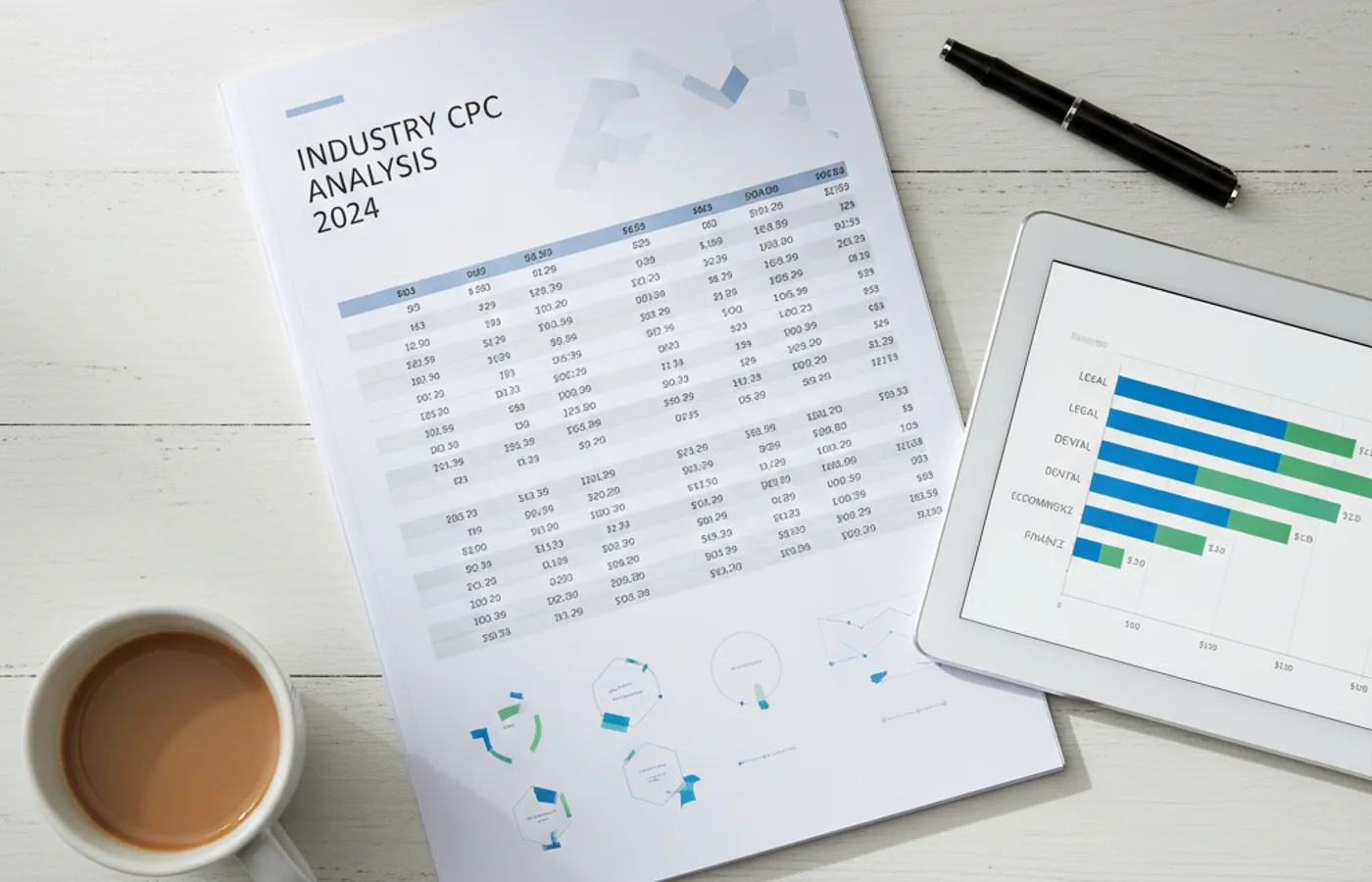
| Industry | Avg CPC (Search) | Avg CPC (Display) |
|---|---|---|
| Legal services (general) | $8.94 | $0.86 |
| Personal injury law | $54.86 | $1.20 |
| Dental & dentists | $6.49 | $0.78 |
| Health & medical | $3.17 | $0.65 |
| Medical spas / aesthetics | $5.92 | $0.71 |
| Chiropractors | $3.85 | $0.62 |
| Real estate | $2.37 | $0.75 |
| Plumbing services | $11.97 | $0.95 |
| Roofing services | $13.45 | $0.98 |
| HVAC services | $9.27 | $0.91 |
| Ecommerce (general retail) | $1.16 | $0.45 |
| B2B SaaS | $3.80 | $0.79 |
| B2B (general) | $3.33 | $0.79 |
| Finance & insurance | $4.01 | $0.86 |
| Insurance (auto, home, life) | $18.57 | $1.10 |
| Education | $2.40 | $0.47 |
| Travel & hospitality | $1.53 | $0.44 |
| Automotive | $2.46 | $0.58 |
| Employment & jobs | $2.04 | $0.78 |
| Home goods | $2.94 | $0.60 |
Sources: WordStream/LocaliQ Google Ads benchmarks (2024-2026 reports), Statista PPC industry CPCs, and aggregated 2026 client account data from Google Ads Marketing Agency. Use these as orientation; your account's actual CPC depends on Quality Score, geography, match type and competition.
A few patterns jump out. Legal services and insurance sit at the top because each conversion is worth thousands to tens of thousands of dollars. Home services (plumbing, roofing, HVAC) are mid-tier expensive because the urgency creates auction pressure. Ecommerce, travel and education sit at the bottom because the average order value is lower and Google Shopping moves a lot of the volume off the standard Search auction.
If you are in a vertical not listed, the rough rule is: CPC scales with average customer lifetime value. A $50 transaction supports a sub-$2 CPC. A $5,000 contract supports a $20-$50 CPC. A $50,000 deal supports a $100+ CPC. Use that as a sanity check.
Free for accounts spending $1,500+/month
Where does your CPC sit vs your industry?
We'll benchmark your actual CPC, Quality Score distribution and waste against your vertical. Written PDF in 48 hours, no obligation.
Why Google Ads CPCs Vary So Much
Four factors explain almost all of the variance between a $0.85 click and an $87 click. Once you understand them, you can predict roughly where your industry will sit before you ever launch a campaign.

1. Competition density
Google Ads is an auction. The more advertisers bidding on the same keyword, the higher the CPC. "Personal injury lawyer Houston" has hundreds of US firms bidding nationally and dozens in Houston alone. "Wedding photographer Tulsa" has maybe 12. The math is brutal and direct.
2. Conversion value
A signed personal injury case is worth $20,000-$60,000 in legal fees. A car insurance policy is worth $800-$2,400 over its first year. A new dental patient is worth $1,500-$3,000 lifetime. A pair of shoes is worth $80. Advertisers can rationally pay more per click when each conversion is worth more, which inflates the entire vertical's CPC.
3. Intent (commercial vs informational)
A search for "emergency plumber near me" is pure commercial intent and gets bid up to $25-$60. A search for "how to fix a dripping faucet" is informational and the same plumbing advertisers will not bid on it at all. The Google Ads CPC you see in benchmarks is heavily weighted by commercial-intent keywords.
4. Geography
The same keyword can cost 3x more in New York or LA than in a tier-3 metro. "Dentist near me" averages $14 in Manhattan vs $5 in Tulsa. CPC scales with the local economic density and number of competing local businesses with active accounts.
Google Ads CPC by US City
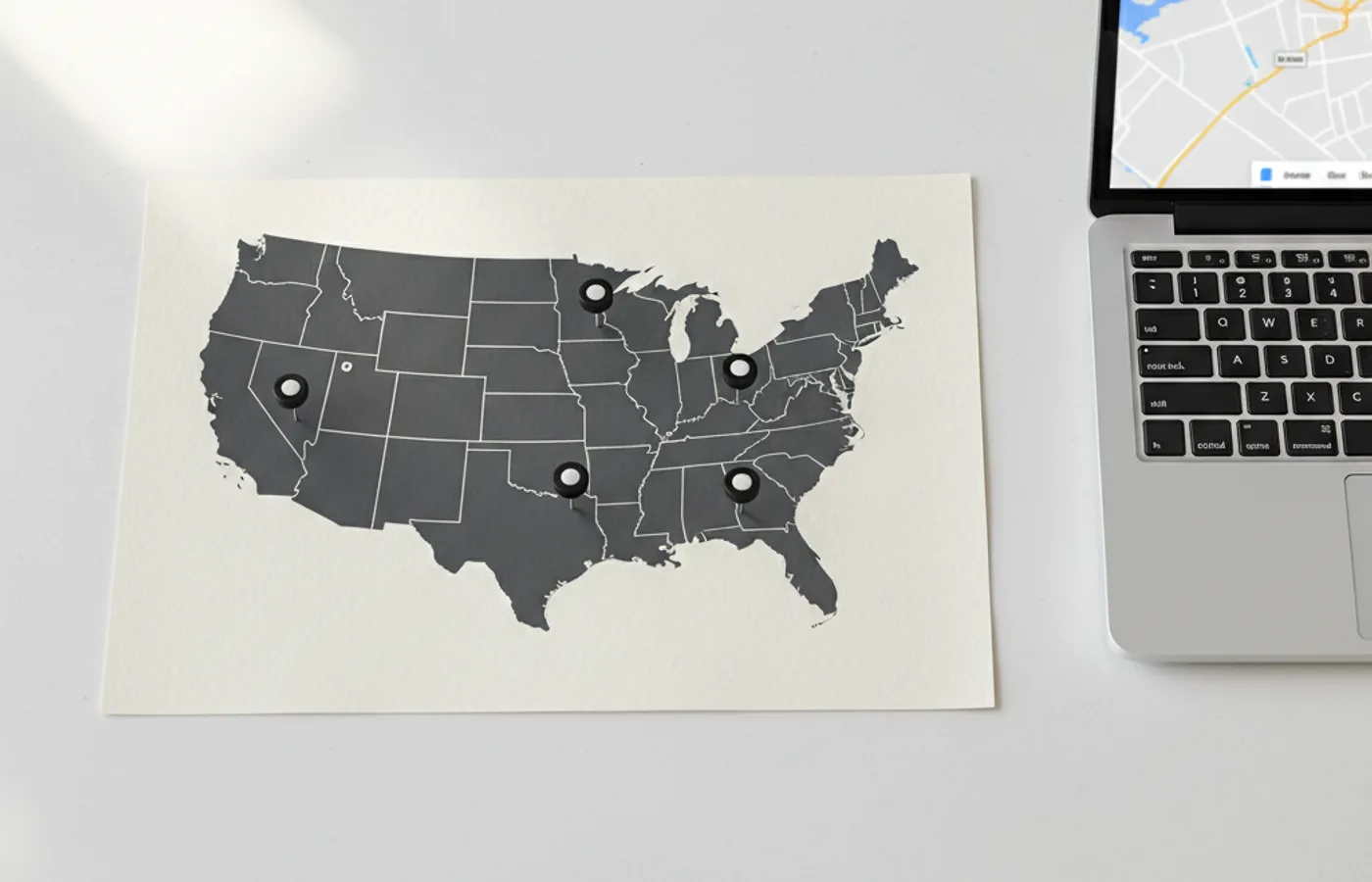
Below is a city premium / discount table for the 10 largest US Google Ads markets. Read the percentage as premium vs national average for the same vertical and keyword set.
| City | CPC vs National Avg | Context |
|---|---|---|
| New York, NY | +22% | Highest competition density in the US. Legal CPCs north of $80 are routine in NY. |
| Los Angeles, CA | +18% | Entertainment and luxury verticals push CPCs well above national average. |
| Chicago, IL | +8% | Heavy in legal, medical and B2B; mid-tier premium vs national mean. |
| Houston, TX | +5% | Energy + medical drive premium CPCs in those niches; otherwise close to average. |
| Miami, FL | +12% | Real estate, cosmetic surgery and personal injury law inflate citywide averages. |
| Dallas, TX | +4% | Strong B2B and home-services markets; slightly above national average. |
| Atlanta, GA | 0% | Close to the national CPC mean across most verticals. |
| Phoenix, AZ | -3% | Slightly cheaper. Home-services and HVAC see seasonal spikes in summer. |
| Denver, CO | -2% | Cannabis-adjacent, fitness, and outdoor verticals show competitive but reasonable CPCs. |
| Seattle, WA | +6% | Tech and SaaS push B2B CPCs higher; consumer verticals near average. |
The variance is not random. New York, Los Angeles and Miami consistently sit at the top because of dense legal, real-estate and luxury markets. Phoenix, Denver and Atlanta hover around or below the national mean. If you operate in a high-CPC metro, the practical move is tighter geo bids on your highest-converting ZIP codes rather than blanket city targeting.
Worth noting: city-level variance is most pronounced for service businesses (dentists, lawyers, plumbers, real estate). For ecommerce and SaaS, geographic variance is much smaller because you are competing nationally regardless of where the customer sits.
How to Lower Your Google Ads CPC: 10 Tactics That Work
Lowering CPC is not magic. It is a stack of 10 boring optimizations done consistently. Most accounts we audit are doing 3-4 of them well and ignoring the rest. Here is the full playbook.

- 1
Improve Quality Score
Quality Score (1-10) directly discounts your CPC. Going from QS 5 to QS 8 can cut CPC by 30-50% on the same keyword. The three inputs are expected CTR, ad relevance and landing-page experience. Tightening ad-group themes (one tight keyword theme per ad group) is the single biggest QS lever.
- 2
Add aggressive negative keywords
A typical neglected account wastes 20-30% of spend on irrelevant search terms. Mine the search terms report weekly, add negatives at the campaign and account level, and use shared negative lists for evergreen junk (free, jobs, salary, DIY, login).
- 3
Use exact and phrase match strategically
Broad match without smart bidding is a CPC inflator. Either pair broad match with target CPA / target ROAS, or default to phrase and exact match for evergreen keywords. Mixing match types in the same ad group makes attribution and Quality Score messy.
- 4
Tighten geo bids
In most accounts, 70% of conversions come from 30% of locations. Use location bid adjustments (-50% to -100% on weak ZIPs / cities, +20-50% on top performers) to redirect spend toward profitable geographies and lower the blended CPC.
- 5
Schedule ads to high-intent hours
B2B leads convert mostly Monday-Thursday, 9am-5pm in the customer time zone. Lead-gen verticals see 2x conversion rate in business hours. Pause or bid down evenings and weekends if you do not staff them.
- 6
Use ad extensions everywhere
Sitelink, callout, structured snippet, call, location and image extensions raise CTR by 10-20% on average, which raises Quality Score, which lowers CPC. They are free real estate and most accounts use 2-3 instead of all of them.
- 7
Write better ads (RSAs with strong pinned headlines)
Responsive Search Ads with 3 pinned headlines (your strongest USPs) and 12 variant headlines outperform machine-generated mush. Ad strength of "Excellent" alone correlates with 4-9% CTR uplift, and CTR pulls CPC down via Quality Score.
- 8
Audit your landing pages for relevance
If your ad says "Emergency dentist Austin" and your landing page says "About our practice", landing-page experience tanks. Match H1 to ad headline, surface the offer in the first 100 pixels, prove trust above the fold (reviews, license, certifications). Landing-page work routinely cuts CPC 15-25% on the same keywords.
- 9
Bid by device, not just keyword
Mobile CPCs are typically 20-40% lower than desktop, but mobile conversion rates are also lower for considered purchases. Set device bid adjustments based on actual CPA per device, not gut feel. Many B2B accounts find desktop is 3x more profitable than mobile despite higher CPC.
- 10
Test smart bidding (target CPA / target ROAS)
Manual CPC made sense when accounts had 10 keywords. With Performance Max and broad match, smart bidding is the only way to manage at scale. Once you have 30+ conversions per month per campaign, target CPA usually beats manual CPC on cost-per-conversion within 4-6 weeks.
Industry Case Studies (Anonymized)
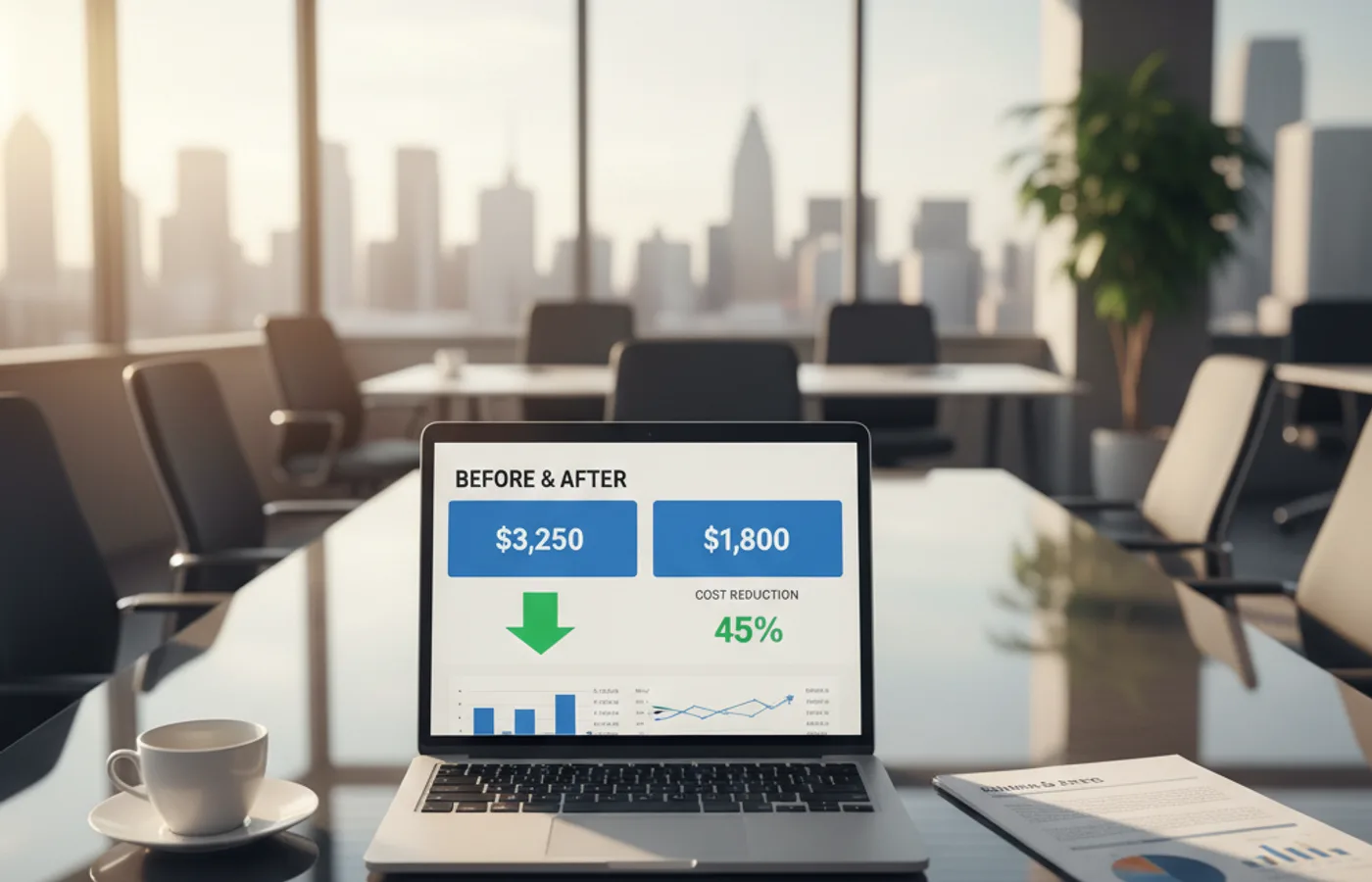
Four real CPC reduction case studies from US client accounts. Names removed for confidentiality, numbers and tactics are accurate.
Personal injury law firm, Houston TX
Starting point: $87 average CPC, $640 cost per signed case
What we changed: Rebuilt account into 12 tightly themed campaigns by case type (auto, slip & fall, medical malpractice, workers comp). Added 1,400 negative keywords mined from 18 months of search-term history. Moved from manual CPC to target CPA on each campaign. Rewrote landing pages to match ad themes and added video testimonials above the fold for trust.
Result: CPC dropped to $52 (-40%) within 90 days. Cost per signed case down to $410 (-36%). Same monthly ad budget, 31% more signed cases.
Multi-location dental group, 6 clinics across Texas
Starting point: $11.40 average CPC across all clinics, $87 cost per booked first appointment
What we changed: Split single campaign into 6 location-specific campaigns with tight geo radius (5 mile around each clinic). Added 800 negatives (jobs, salary, school, DIY whitening). Implemented call tracking with offline conversion import to feed Google smart bidding with actual booked appointments, not just clicks. Rewrote ad copy with insurance + financing messaging.
Result: CPC dropped to $7.20 (-37%). Cost per booked appointment $54 (-38%). Quality Score average rose from 5.2 to 7.8 across the account.
B2B SaaS (HR tech), $25k/month spend
Starting point: $8.40 CPC, $310 CPA on demo bookings, ROAS unmeasured
What we changed: Audited search terms and found 34% of spend on competitor brand searches with sub-1% conversion rate. Killed competitor bidding outside of 2 named competitors. Rebuilt around 3 product-feature campaigns. Added LinkedIn intent audiences via Customer Match. Set target CPA = $200 and let the account learn for 6 weeks.
Result: CPC down to $5.10 (-39%). CPA dropped to $178 (-43%). Pipeline-attributed revenue up 51% on flat ad budget.
Roofing contractor, Dallas-Fort Worth metro
Starting point: $22.50 average CPC on storm/insurance keywords, 11% conversion rate
What we changed: Aggressive negative-keyword sculpting (jobs, license, training, repair vs replace). Geo-targeted only ZIPs with median home value above $250k. Added click-to-call extensions during peak storm-season weeks. Built dedicated landing pages per insurance carrier (State Farm, Allstate, Travelers).
Result: CPC down to $14.80 (-34%) on the same keyword set. Conversion rate up to 17%. Cost per qualified roof inspection lead dropped 47%.
CPC Benchmarks vs Your Business: How to Interpret Them
Industry benchmarks are useful for orientation but dangerous as a target. A CPC that is half the industry average can still be unprofitable. A CPC that is double the average can be wildly profitable. The four numbers you actually need to evaluate your CPC are:
- Conversion rate on the landing page (clicks to leads or sales)
- Average customer value (transaction value or LTV)
- Close rate from lead to customer (for B2B and services)
- Acceptable CAC (what you can afford to pay per customer)
Multiply backwards from acceptable CAC to figure out your target CPC ceiling: if you can pay $400 per customer, your conversion rate is 4% and your close rate is 25%, your target CPC ceiling is $400 * 0.04 * 0.25 = $4. If your actual CPC is $7, you have a CPC problem (or a conversion-rate problem). If your actual CPC is $2.50, you are leaving volume on the table by under-bidding.
Use the industry benchmark table as a sanity check on whether you are anywhere near reasonable, then size your real target against the math above.
Free for accounts spending $1,500+/month
Get a Free CPC Benchmark Audit
We'll pull your real Google Ads data, benchmark your CPC against your industry, identify the top 5 sources of waste and give you a written 90-day plan to lower CPC. PDF delivered in 48 hours, no obligation.
Frequently Asked Questions
What is a "good" Google Ads CPC in 2026?
There is no universal good CPC. A $50 CPC for a personal injury attorney can be wildly profitable if a signed case is worth $30,000. A $1.50 CPC for a $20 ecommerce product can be a disaster. Always evaluate CPC against conversion rate and average customer value, not in isolation. Use the industry table above as a rough mid-line, then aim 20-30% below it once your account matures.
Why is my CPC so much higher than the benchmarks?
The four most common reasons: (1) low Quality Score (typically 3-5 instead of 7+), (2) broad geographic targeting in expensive metros, (3) bidding on broad-match keywords without smart bidding, (4) competing on commercial-intent keywords with weak landing pages. A free Google Ads audit pinpoints which of the four is hurting you the most.
How accurate are these 2026 CPC benchmarks?
These are aggregated medians from public industry reports (WordStream/LocaliQ Google Ads benchmarks reports, Google industry insights, Statista PPC reports) and our own portfolio of US client accounts. CPCs in your specific account can vary by 30-50% in either direction based on geography, brand vs non-brand, match type, time of day and Quality Score. Treat them as orientation, not gospel.
Are CPCs going up or down in 2026?
Up. Average CPCs across most US verticals have climbed 10-15% year over year for the past 4 years. The two big drivers are (1) more advertisers competing on the same auctions and (2) the shift to AI-driven bidding strategies that pay more for high-intent clicks. Display CPCs have been flatter, in the $0.40-1.00 range across most industries.
Why are personal injury law CPCs so insane?
A signed personal injury case in the US is worth on average $20,000-$60,000 in attorney fees (sometimes much more). At those economics, paying $80-$200 per click and $400-$1,200 per signed case still produces a 30-100x ROI. So firms keep bidding up the auction. Same dynamic in mesothelioma, DUI defense and high-asset divorce.
Is Performance Max cheaper than Search Ads?
Often yes on a CPC basis (because Performance Max blends Search, Display, YouTube, Discover and Gmail inventory, and the cheaper inventory drags down the average). But on cost per conversion the comparison depends on your conversion data feed quality. Performance Max needs at least 30-50 conversions/month to optimize well. Below that, Search Ads with manual or target CPA bidding usually beats it.
Should I bid on my own brand name?
Yes in 99% of cases. Brand-keyword CPC is typically $0.50-$3.00 with a 15-40% conversion rate, which gives you a CPA cheaper than any other channel. The "but my SEO already ranks #1" argument ignores that 50%+ of branded searches in 2026 happen with AI overviews and shopping ads above the organic result. Defend the brand auction.
Does ad position 1 always cost more than position 4?
Yes, but not by as much as people think. Position 1 typically costs 30-60% more than position 4, while delivering 2-4x the CTR. The right question is conversion economics: if you sell a $40k SaaS subscription, paying double for position 1 is trivial. If you sell a $25 widget, position 4 with strong ad copy is often more profitable.
How long does it take to lower CPC after making changes?
Quality Score updates within 2-4 weeks of CTR / relevance changes. Negative keyword sculpting shows impact within 7 days. Smart bidding strategies take 6-8 weeks to fully exit the learning phase. Landing-page improvements can shift Quality Score in 3-4 weeks. Plan for a 90-day cycle to see the full compounded effect of a CPC reduction program.
Do you offer a free CPC audit?
Yes. We run a free audit on any active Google Ads account spending at least $1,500/month. You get a written PDF with your actual CPC vs industry benchmarks, the top 5 sources of waste in your account, Quality Score distribution, and a 90-day plan to lower CPC. No obligation. Email info@googleadsmarketingagency.com or message us by text at .